Monuments & Museums
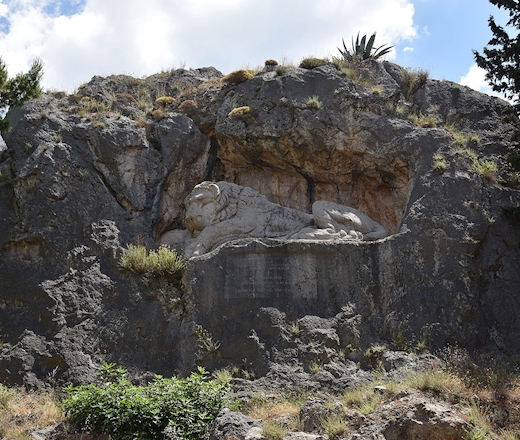
This important sculpted monument from more modern history is located in the Pronoia district, close to the graveyard of Agion Panton. According to the inscription that accompanies it, it was carved between 1840-1841 following a donation by the Bavarian king, Ludwig I, in memory of the Bavarian soldiers who died of Typhus between 1833 and 1834, and were buried in the area.
![The Sacred Church of the Koimisi of the Theotokos [Dormition of the Virgin] in Plataniti](/media/1380/img_2525.jpg?anchor=center&mode=crop&quality=100&width=520&height=440&rnd=131014970120000000 "The Sacred Church of the Koimisi of the Theotokos [Dormition of the Virgin] in Plataniti")
A few metres south east of the church of the Metamorphosi of the Sotir [Transfiguration of the Saviour], in the central square of the village, is the church of the Koimisi of the Theotokos. The church is one of a group of churches of the same type that were built in Argolis at the end of the 17th century, during the time of the second Venetian occupation.
![The Sacred Church of the Metamorphosi of the Sotir [Transfiguration of the Saviour] in Plataniti](/media/1387/img_2547.jpg?anchor=center&mode=crop&quality=100&width=520&height=440&rnd=131014975200000000 "The Sacred Church of the Metamorphosi of the Sotir [Transfiguration of the Saviour] in Plataniti")
This small church belongs to the relatively rare type of compact cross-in-square. The small scale of the church, its carefully laid masonry and 'Athenian' style dome, with its limestone cornices, add a sense of grace and elegance to the monument, which dates from the first fifty years of the 12th century.
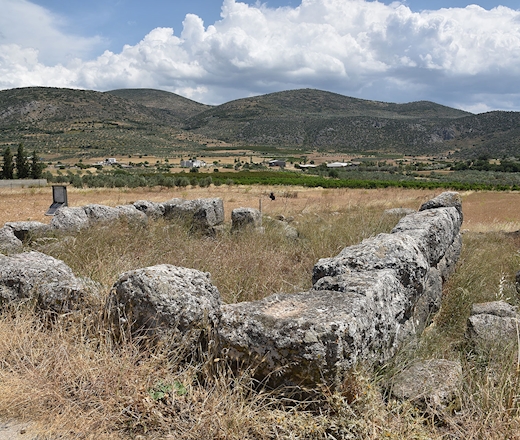
During the second half of the 6th century BC, a farmhouse was built in Pyrgouthi, in the Berbati Valley, which incorporated the ruins of the Hellenistic tower which was already on the site. The remodelled tower was used for the production and storage of wine, as demonstrated by the winepress and the storage spaces, which contained large amphora and pithos jars.
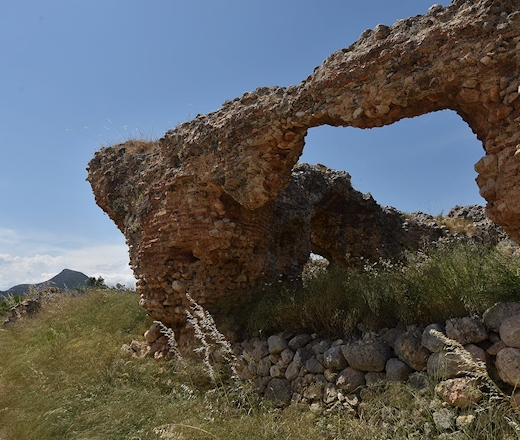
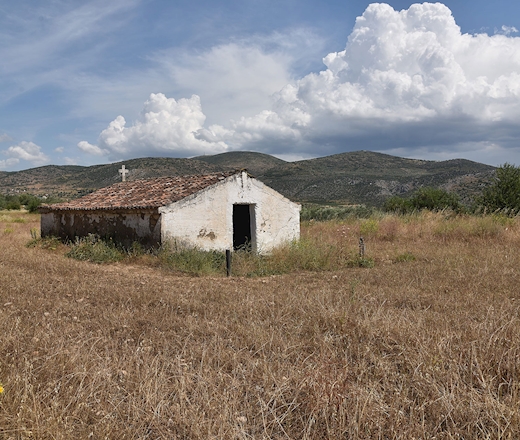
This is a wooden-roofed church, with a pitched tiled roof, a few metres to the north of the Roman baths. Most likely, the modern church covers sections of an older, pre-Christian temple, or something connected with the baths.
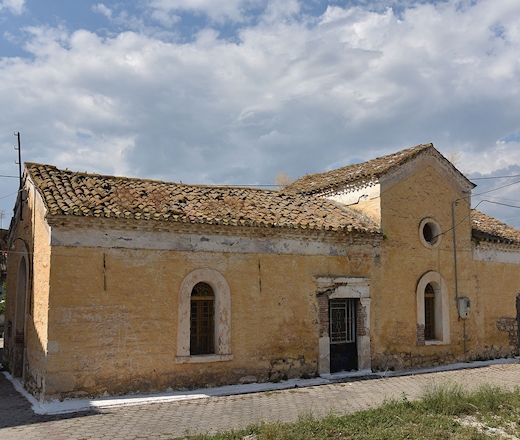
The church of Agios Nikolaos is in the village of Pyrgella, to the east of the city of Argos. The church is one of a group of churches that were built in Argolis at the end of the 17th century or the beginning of the 18th, during the time of the second Venetian occupation.
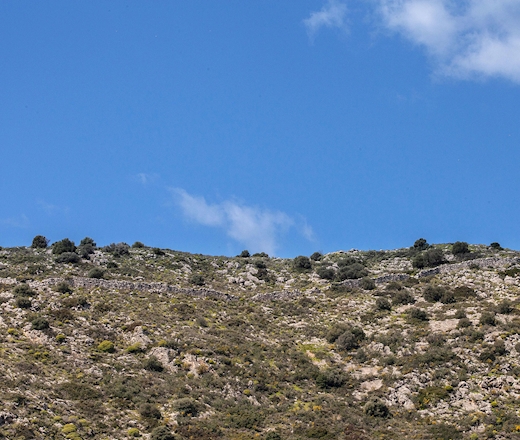
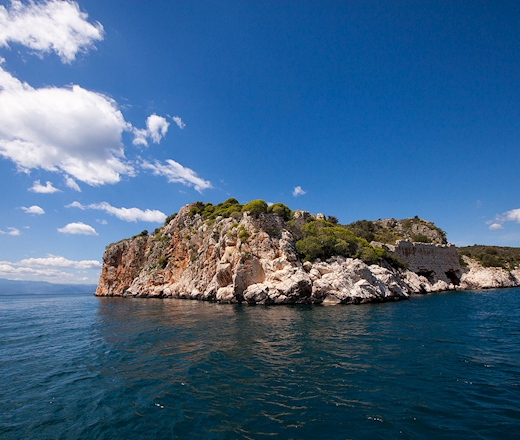
The fortress, now in ruins, is located on a hill in the south-west part of the island. The shape of the ground-plan is adapted to the topographical features of the hill. It consists of an external wall and a citadel: within the walls are preserved the ruins of a cistern, and a church on the summit of the hill.

The castle is built on two rocky peaks on a steep ridge, 2 km north-west of the settlement of Thermisia. It is associated with the salt-ponds on the shore below, which it protected. Due to the naturally fortified site of the castle, it is spoken of in the 15th century as impregnable. It overlooks the valley of Thermisia, and Ermioni and also the gulf of Hydra.
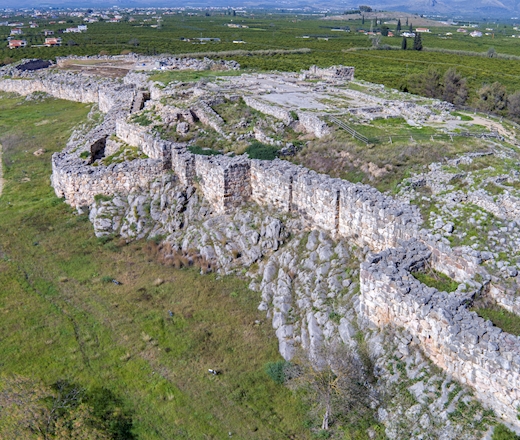
Η Τίρυνθα κατοικήθηκε για πρώτη φορά στη Νεολιθική εποχή (7 η -4 η χιλιετία π.Χ.), όπως μαρτυρούν τα λιγοστά κεραμικά ευρήματα που προήλθαν από τα βαθύτερα αρχαιολογικά στρώματα, και παρέμεινε αδιάλειπτα σε χρήση μέχρι την εποχή που ιδρύθηκε η επιβλητική της οχύρωση.
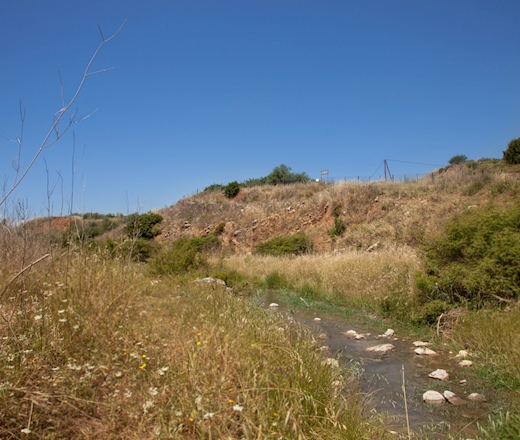
Two kilometres east of Nea (New) Tiryns and about 5 km from the citadel of Tiryns, a unique technical achievement of antiquity has been located. In this area is an enormous embankment, originally lined with boulders at its ends – some boulders can still be seen today – built to divert the rainwater of the Manesis torrent that apparently flowed towards Tiryns and caused floods in the Early Bronze Age (EH II).
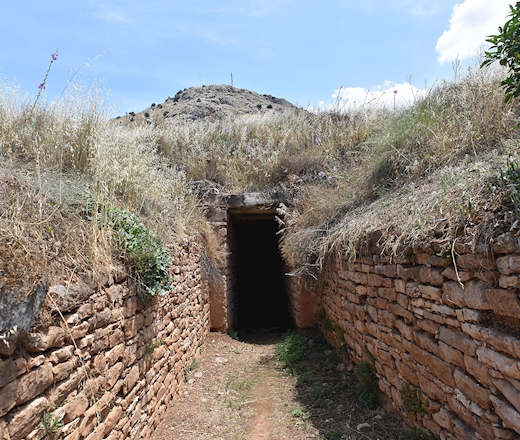
In 1913 a tholos tomb was excavated on the west slope of Profitis Ilias hill, about 1 km from the citadel of Tiryns.
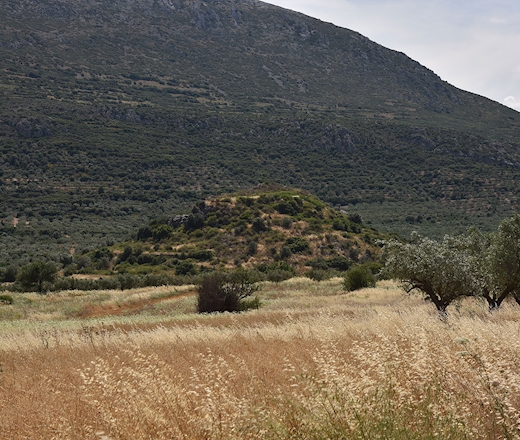

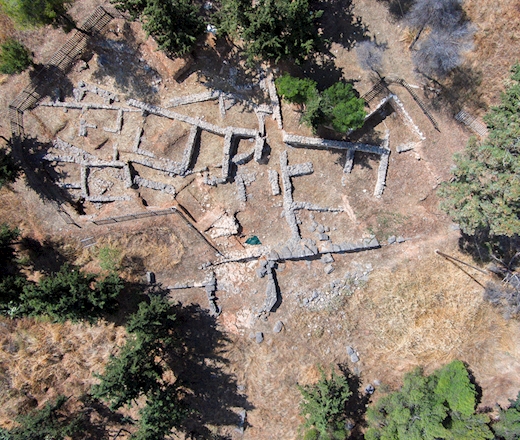
Ο λόφος του Προφήτη Ηλία, η λεγόμενη Ασπίς, κατοικήθηκε για πρώτη φορά στα τέλη της Νεολιθικής εποχής (3.500 π.Χ.).