Monuments & Museums

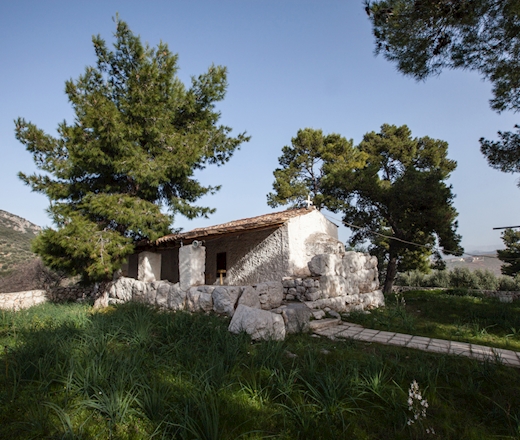
The church of Agios Ioannis Prodromos is located a short distance outside Nafplio, on the low hill opposite the village of Lefkakia. It is built on the ruins of an ancient building. .
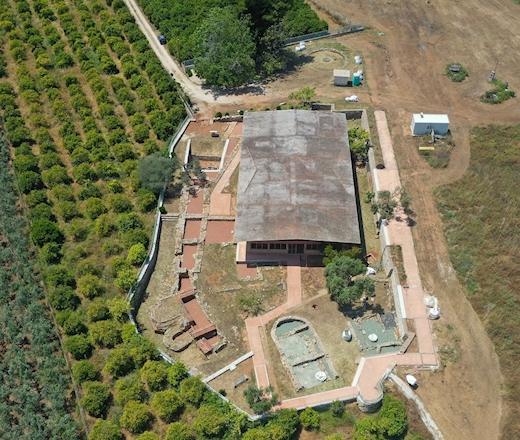
The settlement of Lerna on the west side of the gulf of Argolida, in the modern village of Myloi, is one of the most important Prehistoric sites in Greece. It was in use for 5000 years from the Neolithic to the Mycenean period (6th – 1st millennium BC).
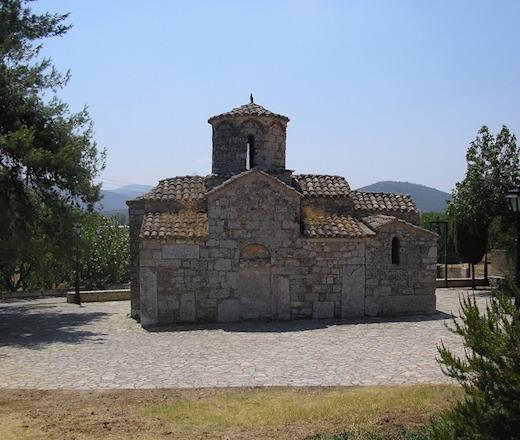
The important Byzantine church of Agios Ioannis Eleimonas stands in the centre of the village. The church follows the architectural style of the simple distyle [two-columned] cross-in-square type, with one three-sided apse projecting to the east and a narthex to the west. The master craftsman who worked on the church was Theofylaktos from Kea, who is known to us from a rare engraved invocation on the outside of the north door.
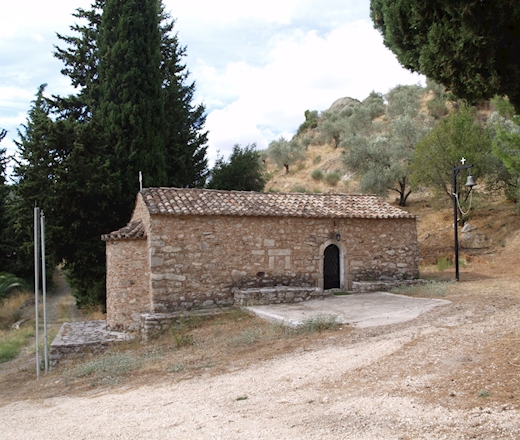
The Monastery of Agios Merkourios is located about 2.5km south of Ligorio, and was in operation until 1833. The only surviving buildings are the catholicon [cathedral church] and what little is left of the cells. The small, single-storied building north-west of the catholicon is a later addition.
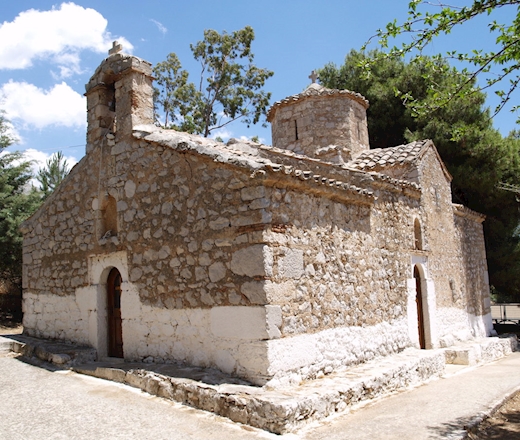
The church is located around 300m to the west of Ligourio at the entrance to the village. It is in the simple four-columned cross-in square type, which used columns and capitals taken from ancient buildings in the area, a practice that is encountered in many churches in Ligourio and the wider area.
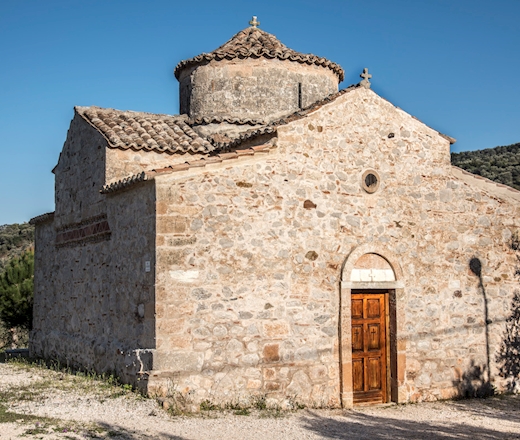
The church is located to the south of the road that goes to Nea Epidauros, and dates from the second half of the 11th century or the beginning of the 12th. It belongs to the distyle [two-columned] cross-in-square type, with three three-sided apses to the east..
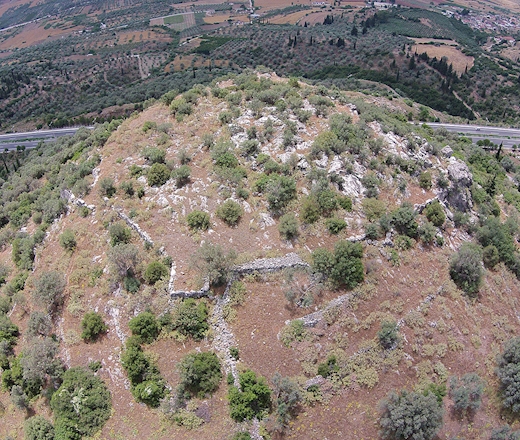
The hill to the northeast of Lyrkeia (Kato Belesi) is known as Paliokastraki [old castle]. The new Corinth-Tripoli motorway passes its southern slopes. On its summit, the remains of a thick wall with gates bears witness to the fact that it was an important fortified position/ancient citadel from the Classical period, overlooking the valley cut by the Inachos River.
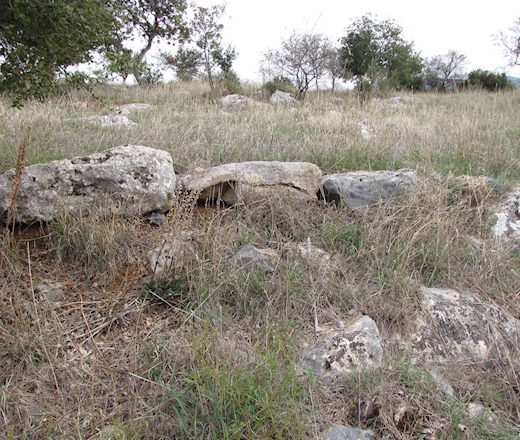
To the west of Argos, near to the village of Merkouri and at the crossroads towards Aria-Mazi in Agrilovouno, architectural remains have survived on a small hillock, which research and written sources (Pausanias II, 25.2) identify with ancient Oinoi.
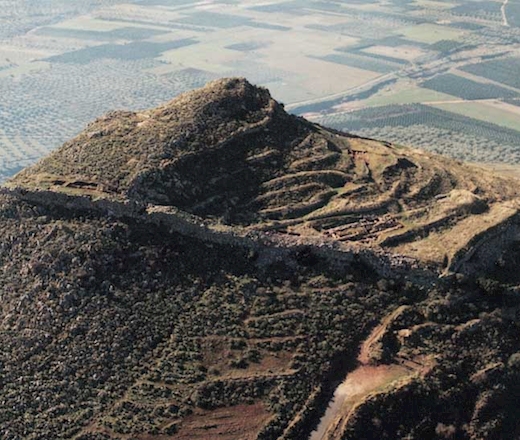
The acropolis of Midea was, together with Mycenae and Tiryns, one of the three main Mycenaean centres in Argolis. Its importance is demonstrated by its impressive cyclopean defences, its place in mythology, the rich necropolis in neighbouring Dendra and the finds from excavations of the site, which began in 1939 and, after a long break, have been going on systematically for the last twenty years.

Η ανάγκη κατασκευής ενός νέου αρχαιολογικού μουσείου για την αποθήκευση και την έκθεση ανασκαφικών ευρημάτων από έργα ενός αιώνα και πλέον είχε γίνει επιτακτική στις αρχές της δεκαετίας του 1980, όταν ο Γεώργιος Ε. Μυλωνάς σε συνεργασία με το Υπουργείο Πολιτισμού με χαρακτηριστική σοφία επέλεξαν τη θέση του στη βόρεια πλαγιά του την Ακρόπολη, επιλύοντας αντιρρήσεις τοπικών εκπροσώπων που ήθελαν να χτίσουν το νέο μουσείο στο διπλανό χωριό.
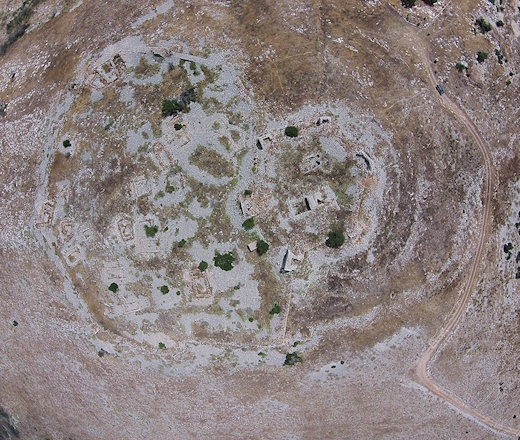
The castle is located at the southern limit of the Argolid plain near the sea, on the hill of Pontinos. It has visual contact with Larissa Castle (Argos) and Acronauplia. It controls the Argolid plain and the south entrance of the Gulf of Argos. The castle is located behind the village of Myloi (previously known as Kiveri). Today's settlement of Kiveri is located a few km to the south.
The castle consists of the acropolis and outer ward enclosure: in total an area of approximately an hectare is involved, with a circumference of 440 meters. The layout of the fortification is carefully done and its construction conscientious.
.
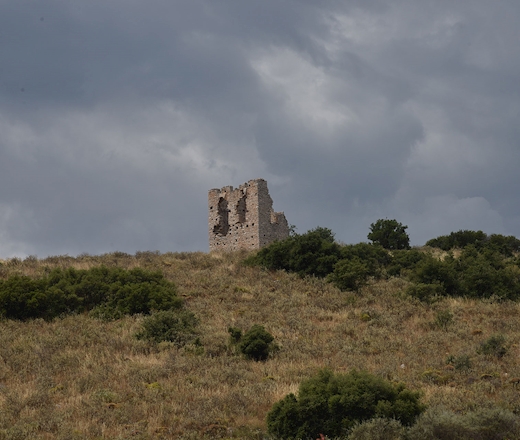
The tower is between Myloi and Kiveri, south of the Kiveri fortress, on a low hill. The oral tradition relates that the tower belonged to a princess who lived there in the old days. She was so beautiful, that in order not to be seen when she went to the sea, an underground passage was built from the coast up to the tower.

Ο λόφος Παλαμήδι οχυρώθηκε για πρώτη φορά από τους Ενετούς κατά τη 2η Ενετοκρατία (1686-1715) με ένα τέλειο σύστημα συγχρονισμένων οχυρώσεων. Το Παλαμήδι είναι ένα κλασικό μπαρόκ οχυρό, χτισμένο σύμφωνα με σχέδια των Giaxich και Lasalle. Το 1715 κατακτήθηκε από τους Τούρκους, οι οποίοι το κράτησαν μέχρι το 1822, οπότε και μεταφέρθηκε στο Ελληνικό Κράτος.
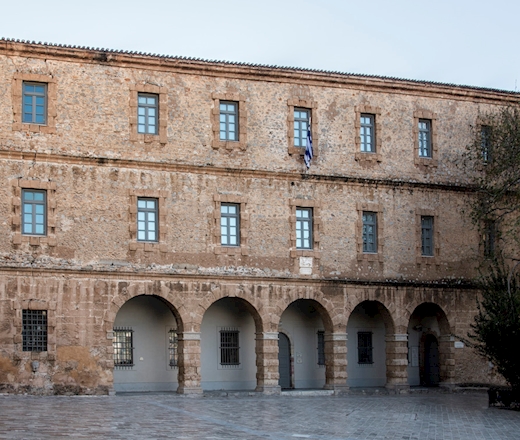
From the beginning of the 1930's, the Archaeological Museum of Nafplion has been housed in the imposing three-storey Venetian building which forms the western boundary of Syntagma [constitution] Square. From 2003 to 2008 renovation work was carried out on the museum as part of the project 'Improvement/Upgrade of the Archaeological Museum of Nafplion', which was co-funded by Greece and the European Union. The museological programme of the new exhibition is arranged into thematic units, which demonstrate the civilisations that developed in Argolis from the furthest pre-history up to Late Antiquity and include finds from Greek excavations and those of the German Archaeological Institute, the Swedish Institute, and the American School of Classical Studies.